

RECOMMENDATION
ENGINE
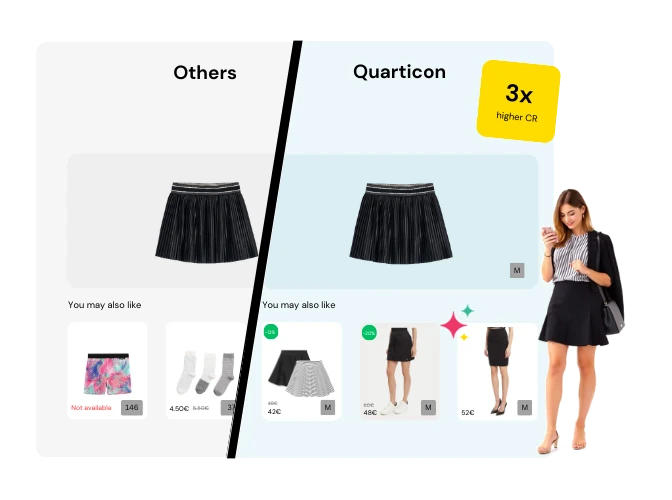
Personalization that works for every visitor, not just email subscribers
Most personalization tools only work after customers identify themselves: they need to log in, enter their email, or be matched to a CDP profile. That means ~95% of your traffic – anonymous visitors, one-time browsers, and first-time shoppers – see popular items only.
Your visitors deserve better. So do you.
Quarticon’s Recommendation Engine personalizes products for every single visitor in real-time. Logged-in customers, anonymous browsers, email subscribers, push notification recipients – it doesn’t matter.
One recommendation engine, personalization everywhere, for everyone.
Start personalizing anonymous traffic today!
What sets Quarticon’s renowned recommendation engine apart
True pAI algorithms
What difference does it make? Up to 3.5 times higher conversions compared to simple rules from competitors or store engines.
Don’t be fooled by random product selection and presentation of best sellers under the guise of “Recommended for you.”
Works for anonymous and identified traffic
No CDP required to personalize experience for identified traffic. which require data integration, customer ID matching, and segment definition before any personalization can happen, lot of manual work, Quarticon’s recommendation engine starts delivering personalized product images within days.
No segment maintenance
Segments grow stale, require constant refreshing, and become a liability as data grows.
Our algorithms learn continuously and adapt in real-time without manual intervention.
True 1:1 personalization
Not a segment-based messaging. Every customer sees different products. Not “everyone in the female sport enhusiasts segment sees this product list”.
True 1:1 personalization means: “Sarah sees these three products, Jessica sees these three different products, and Amanda sees entirely different ones”.
Works everywhere your customers are
One algorithm, one decisioning engine. A single JS snippet + the same HTML snippet power web, emails, push notifications, mobile push, MMS, Whatsapp, and mobile app experiences.
No need to build separate campaigns for each channel.
Results in days, not months
Unlike CDPs, which require data integration, customer ID matching, and segment definition before any personalization can happen, lot of manual work, Quarticon’s recommendation engine starts delivering personalized product images within days.
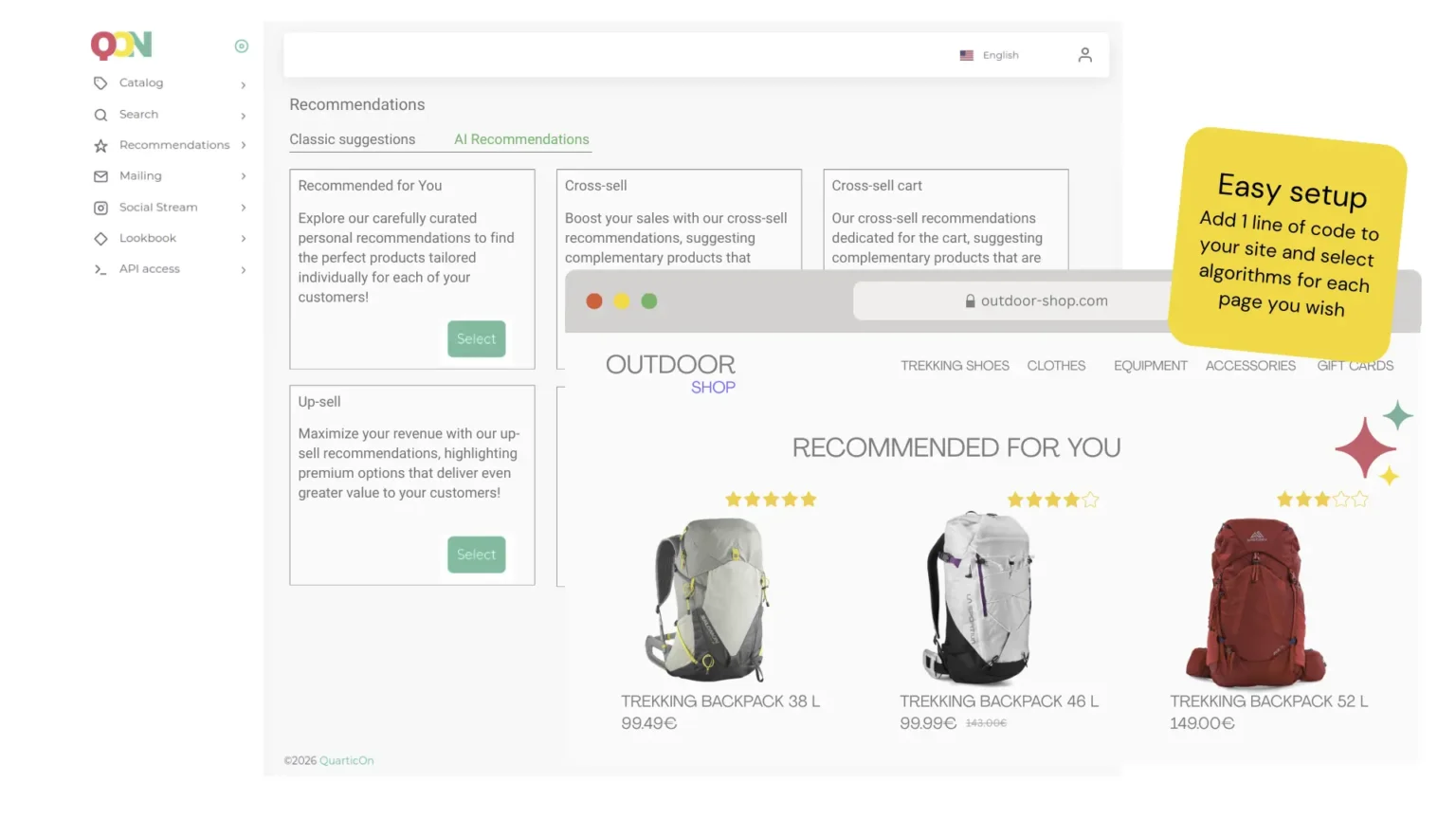
Renowned logic you can’t find anywhere else
Behavioral in-session logic
Recommendation engine learns what a customer wants right now, not from a profile built yesterday.
It watches what you click, what you view, how long you spend in each category, and serves recommendations based on that real-time behaviour.
Product affinity logic
Out proprietary pAI models learn which products naturally go together based on what your actual customers purchase. You can set highly efficient suggestions including: Customers who bought Y also bought Z and Customers like you bought X.
Autonomous bundles trained on historic cart data do not require manual management, matching, linking or marking product series.
Business-logic recommendations
Quarticon’s recommendation engine prioritizes high-margin products, avoids pushing heavily discounted items, and optimizes for customer lifetime value instead of just transaction volume.
This way the engine can be tuned to recommend products that drive margin, not just clicks.
Cold start warming logic
Cold start happens not just at the beginning, but it concerns every time new products appear in your store.
Precomputed candidate algorithms generate personalized suggestions to eliminate cold start problems and boost your sales from the very beginning.
Recommended for you logic
It’s not just a tricky title. “Recommended for you” is the output of our hard computing, in real-time, pAI algorithms.
How does it work? To keep it simple: we find customers similar to you and show you products they loved. The more people buy from your store, the smarter the recommendations get.
Cross-channel consistency
The same customer sees consistent recommendations across web, mobile application, e-mail, web push, mobile push, MMS, and even on WhatsApp because it’s the same algorithm making decisions everywhere.
It’s one decisioning system, not separate campaign tools.
Your CDP can’t do it
No need of CDP at all
Your CDP/MA system costs a fortune, takes months to set up, requires constant maintenance, and still personalizes 5% of your traffic – only your current customers. Because you were said that only CDP/MA can handle it.
The truth is you can target your customers with any tool, even with the cheapest one (check our integration section for MA tools) and our recommendation engine will fill up your content with the proper offers. Automatically.
CDP/MA tools do not deliver personalization
The personalization you actually wanted – showing the right product to the right customer at the right time, automatically, without months of setup – isn’t what a CDP delivers. Even in e-mails for your customers (5% of the traffic volume).
Because you didn’t buy a personalization engine. You bought a data warehouse that requires you to manually decide what to recommend.
Omnichannel personalization with recommendation engine
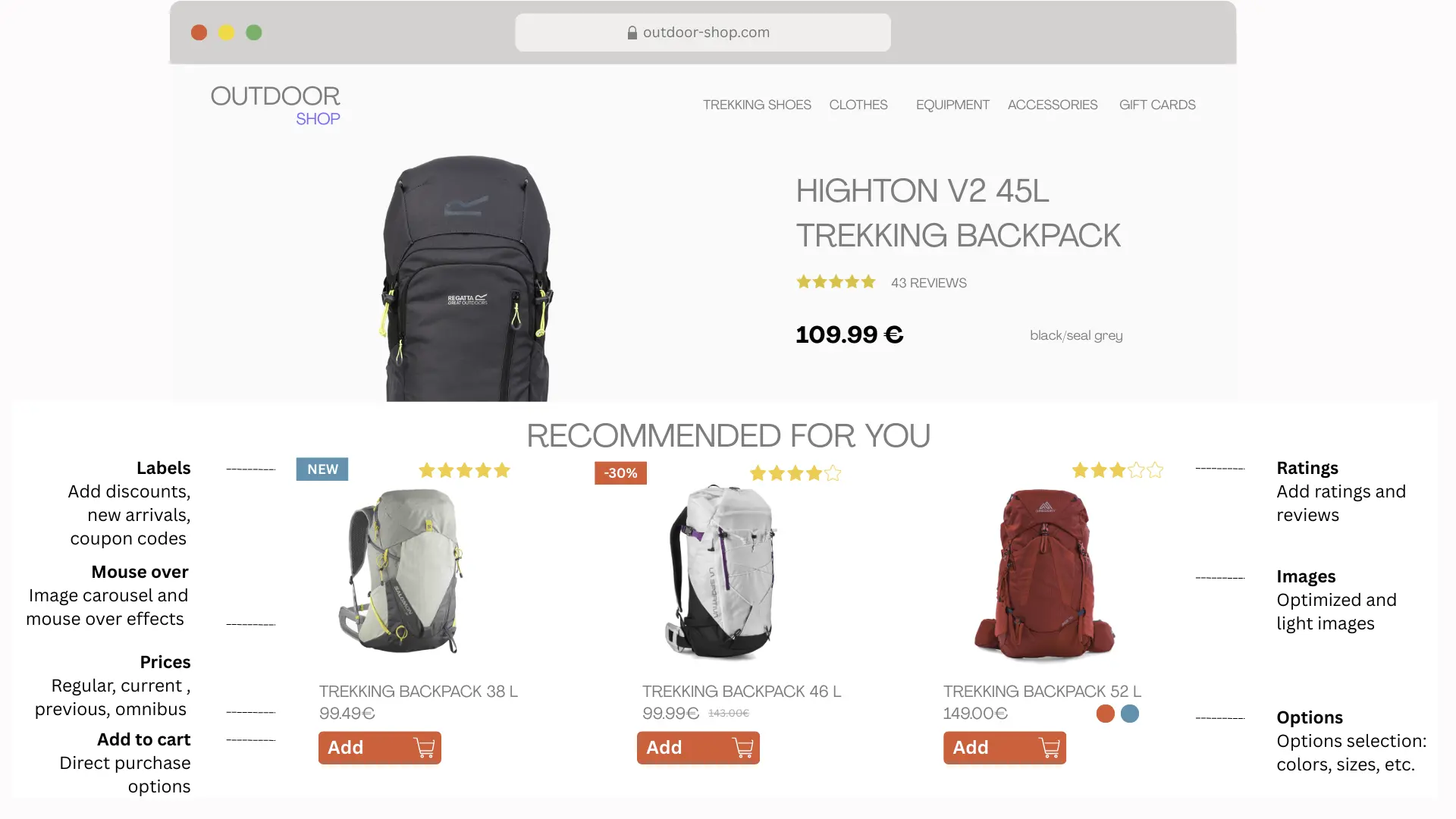
Actually, full and omnichannel personalzation is, what a recommendation engine does. Quarticon’s recommendation engine works in any environment: on page, in app, in emails, web and mobile push notifications, and even text messages and messengers. Our personalization layer for script-less environments (e.g. emails) integrates seamlessly with any sending tool.
Recommendations are also not limited to web widgets. They can be presented in any way. The possibilities are endless.
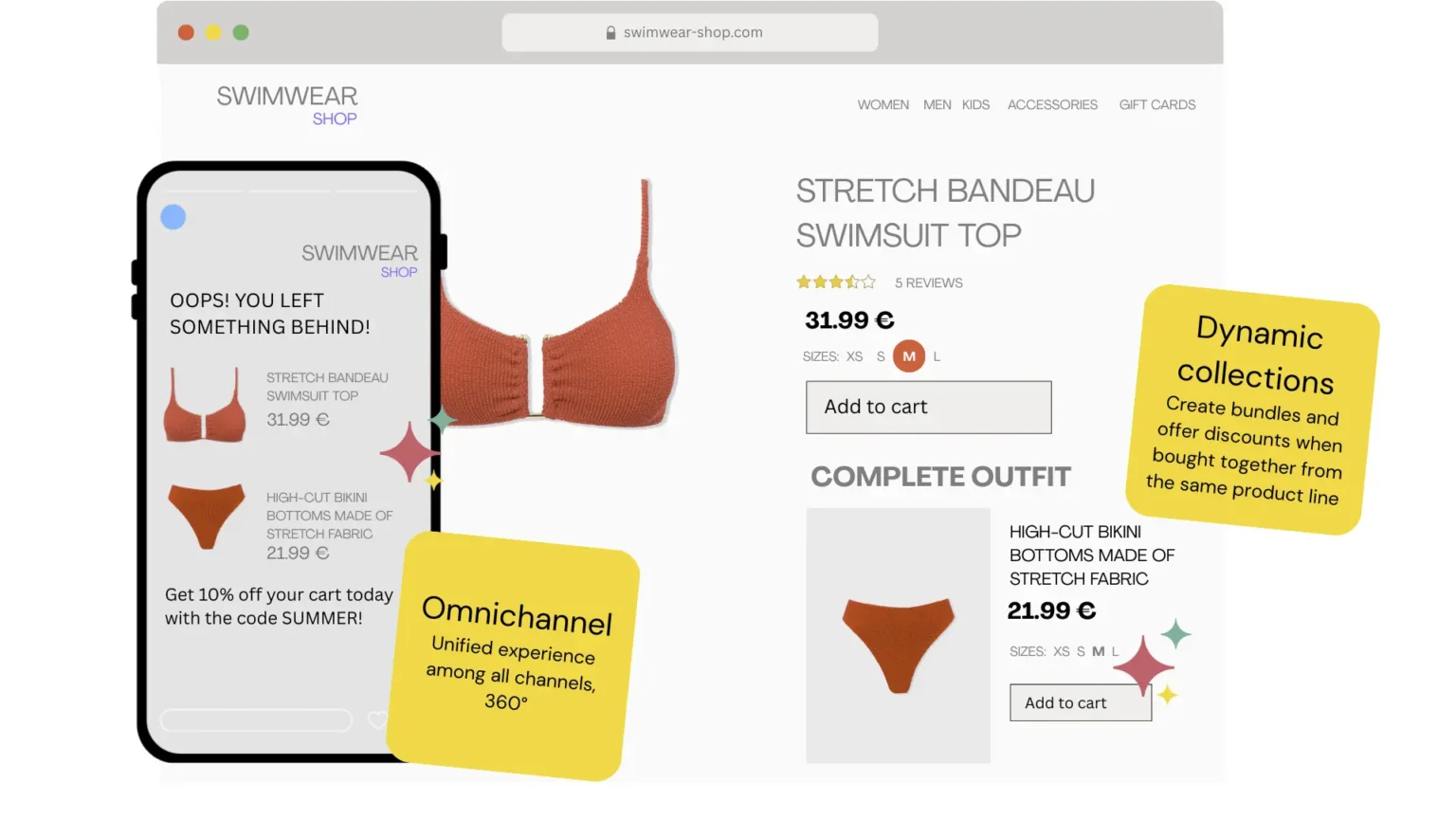
How we boost sales in e-commerce
Furniture and home accessories
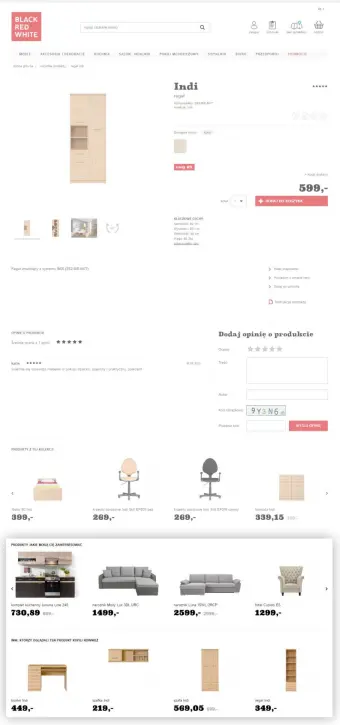
BRW.pl is the Polish e-commerce website for Black Red White, a major furniture and home accessories retailer.
Quarticon AI recommendations generated:
- 5% increase in total sales through our product affinity logic
- 8% increase in total sales through our user-level personalization logic
In both cases we used behavioral in-session logic targeting anonymous visitors to the client’s site.
Sport equipment and apparel
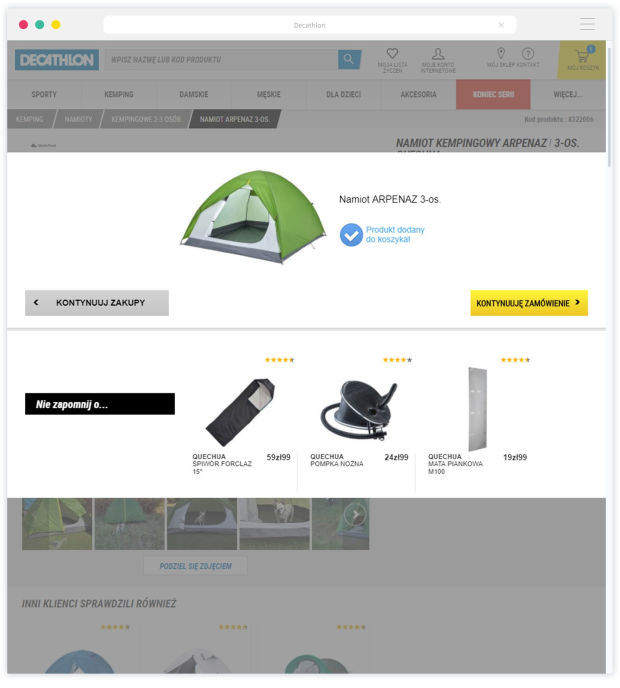
DECATHLON is the world’s largest sporting goods retailer, with both brick-and-mortar and online stores. The brand operates in over 30 countries, and every branch shares the same strong team culture and is guided by the same values: vitality and responsibility.
Recommendations are displayed even to new customers during their first visit to the store. This in-session real-time personalization for the anonymous traffic and up with 13% of total sales in the store!
Jewellery
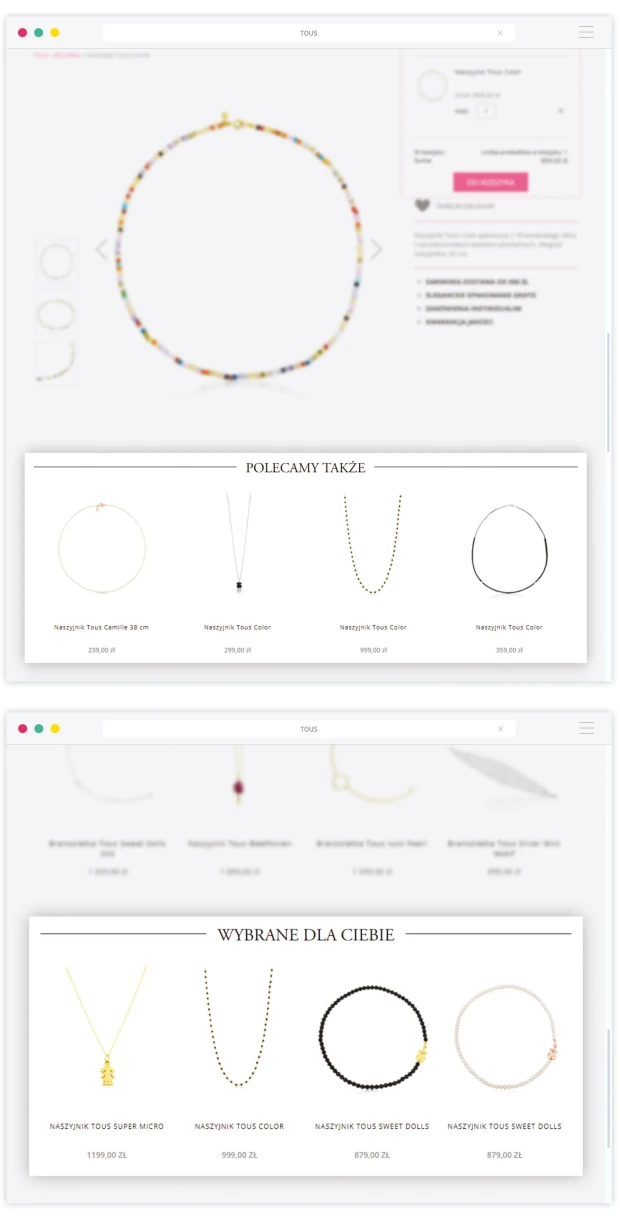
TOUS is a luxury jewellery brand that is also affordable. They have succeeded in earning the trust of customers and tailoring their product range to their individual needs.
With the introduction of personalized recommendations, the shopping experience at the TOUS online store now resembles that of a brick-and-mortar store, and users immediately appreciated the well-curated selection and personalized customer service. This translates directly into increased customer engagement and, consequently, a rise in the average cart value.
Results? 15% of total sales in the store!
Bookstore
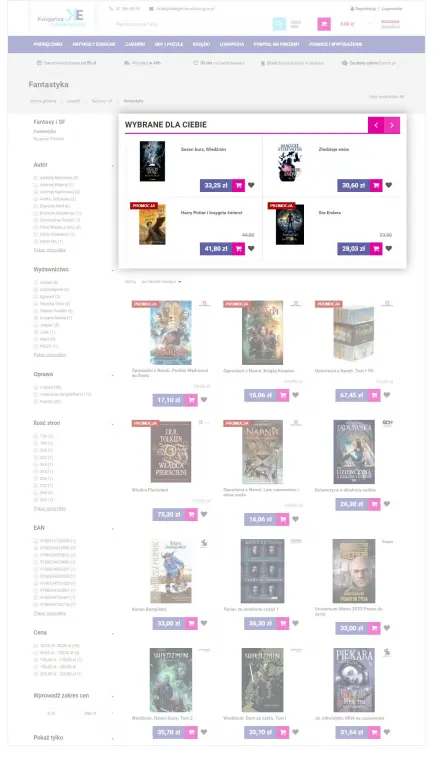
Księgarnia Edukacyjna is an online sales platform operated by one of the country’s leading educational publishers. It specializes in products aimed at teachers, educators, parents, and students.
A purchase doesn’t have to mean leaving the checkout! Thanks to personalized recommendations, we’ve managed to increase the conversion rate on the shopping cart page for additional products (added to the cart at this stage with our dedicated cross-sell logic) to 31.16%.
Why companies choose us
After testing various options available on the market, DUKA decided to go back to Quarticon. We took a full advantage of the service offering. As a result, we have a complete overview of what has changed and what the results are, and they are truly impressive. First and foremost, sales increased by 11% in the first month after implementing the recommendations, and by another 14% after implementing Smart Search. The statistics show that customers are better able to navigate our site, stay on it longer, and most of them complete their shopping by placing an order. However, the biggest surprise for us is the 40% increase in the total number of users who utilize the modern tools implemented on the site, and this is thanks to the switch to a first-party domain.
Aleksandra Burdon
Senior e-commerce Specialist DUKA
For years, Zdro-Vita has been consistently delivering health to our customers’ homes and workplaces. Now, assistance can be provided even faster thanks to Quarticon’s personalized recommendations.
The system automatically selects products tailored to the individual needs of users and helps them efficiently find what they need. Customer satisfaction has translated into strong results for our store, which boasts a shopping cart conversion rate of 15%! We highly recommend it!
Marcin Kozera
Zdro-Vita
Fastball and Quarticon came off the bench to join the starting lineup, showcasing an effectiveness rate of 18% in sales from referrals and a CTR of over 5.63%! After such a spectacular debut, this top-tier player consistently plays every game with us, helping us beat the home team every single time. We highly recommend it! It really works!
Łukasz Gajewski
Zgoda FC
Quarticon is a great and, so far, reliable solution for large stores that, with the help of professionals, have decided to boost their sales at a low cost.
We are now not guessing how complementary products should be paired or how teaching aids should be combined with textbooks. We get this information directly from buyers, whose behavior is tracked by Quarticon. Thanks to personalization, the conversion rate from the category page is 12.67%, and from the shopping cart, 31.16%.
Aleksandra Lasota
Product Specialist, E-Commerce Department at the Educational Bookstore
Drive revenue from anonymous shoppers
Contact us
Increase conversions for guest traffic with lightweight, privacy-friendly personalization.
- Live recommendations on 100% of your traffic in days.
- Personalize anonymous sessions and guest checkouts (not just logged-in users).
- Lower cost per personalized impression and faster uplift.
- ROI in days, not months!
- Simple snippet – no heavy CDP setup. No complicated implementation.
- E-commerce platform and MA tool agnostic. Works with any technology stack!
- Built-in A/B testing and sale lift reporting.
Trusted by retailers that grew guest conversion and average order value.
Fill in the form below and we will contact you immediately
FAQ
What does a recommendation engine do?
A recommendation engine analyzes product and session signals in real time to suggest the most relevant items to each visitor. It uses item metadata (category, price, inventory), behavioral signals (recent page views, add-to-cart, referrer, time on page), and historical interaction patterns to rank and serve product lists — e.g., “also viewed,” “people like you bought,” or contextual upsells.
The goal is to increase conversion rate, average order value, and per-session revenue by showing items the visitor is most likely to act on during that session.
Read more about how the recommendation engine differs from CDP/MA recommendations here: CDP/MA recommendations. Simply Explained.
How is recommendation engine different from a CDP or marketing automation (MA) system?
A CDP/MA focuses on identity resolution, storing unified customer profiles, and orchestrating cross-channel campaigns (email, push, ads). Its primary value is long-term relationship management: segmentation, lifecycle messaging, and one-to-many campaign activation.
A recommender is an on-site, real-time decisioning system whose job is immediate personalization of product selection for the session.
In short: CDP = identity + orchestration; recommender = real-time item decisions for conversion.
Can a recommendation engine work without identified users?
Yes. Modern recommendation engines can operate effectively on anonymous sessions by using session-level context (current browsing behavior, referrer, search query, device, geolocation), short-term event streams, and item-side signals.
These session-based models do not require a persistent profile to personalize experience and can still produce strong uplift for guest shoppers or users who clear cookies.
Will a recommendation engine replace a CDP/MA?
Not necessarily – they solve complementary problems. A recommendation engine usually addresses on-site conversion and real-time product selection, especially for anonymous traffic. In addition to this, Quarticon’s recommendation engine enables cross-channel personalization.
A CDP/MA manages customer identity, cross-channel activation, and CRM workflows useful for retention and lifecycle programs.
Many businesses benefit most by running both: the recommendation engine to maximize immediate on-site revenue across all traffic, off-site personalization, and a simple MA tool just for off-site outreach (without personalization, which is to be delivered by Quarticon).
How quickly does recommendation engine deliver value vs a CDP?
Recommendation systems typically deliver measurable uplift far faster. A basic implementation (snippet + product feed) can show results in days to weeks.
CDPs often require longer onboarding: identity stitching, consent capture, data integrations, and campaign setup, which can take weeks to months before driving comparable, measurable ROI.
The recommender’s short time-to-value is especially valuable when identified-user coverage is low.
Are recommendations systems privacy-friendly?
Yes. Recommendation engine run on first-party session signals or server-side processing without storing or sharing persistent identifiers (e.g e-mails) and does not match (exchange) the identifiers with third-party (e.g. advertising networks). Guest purchases can be retroactively linked to sessions using hashed identifiers at conversion without exposing PII. If privacy regulations or consent require it, models can operate using aggregated or contextual features only. This makes session-based personalization compatible with stricter tracking environments.
CDPs tends to enable cookie matching with 3rd-parties what make them strongly privacy-unfriendly.
What data do you need to start?
Minimum inputs are product catalog (ids, titles, categories, images, price), page view events (product impressions, product page views), and conversion events (add-to-cart, purchases). Integration can be via a small client snippet or server API. Login/email enrichments are optional but useful to improve long-term personalization and to connect post-purchase sessions. The lighter the required data, the faster the pilot; more data enables deeper personalization.
Do recommenders suffer from bias like CDP-trained models?
No. Bias arises only when training data is unrepresentative. CDPs often train on identified users (a small, non-representative subset). Recommendation engines train on broader traffic, reducing that specific sampling bias.
How do costs of recommendation engines and CDPs compare?
A recommendation engine that personalizes 100% of traffic at the same license cost (what not happens – CDPs are much more expensive) will have much lower cost per covered user and per incremental conversion than a CDP that effectively reaches only 5%. Include implementation and recurring labor costs when computing total cost of ownership.
Therefore you can see ROI with recommendation engine in days, while you subside CDPs for months.
When should I choose a recommendation engine first?
Choose recommender-first when:
- the majority of revenue comes from guest or anonymous users (most e-commerce cases);
- you need rapid on-site uplift;
- identified-user coverage is too low to train reliable CDP-driven models;
- or you want a low-friction pilot to prove personalization ROI.
Can we run both in parallel?
Yes, but you should consider costs. CDPs are highly overcharged nowadays. Our suggestion: use the recommendation engine to maximize on-site conversion and revenue across anonymous and logged-in visitors, while marketing automation for sending email campaigns and/or other direct channels. While Quarticon’s handling content delivery (what other recommendation systems do not do), you need just a simple sending tool. That’s all.
What is Quarticon?
Quarticon is a technology company that provides AI tools for e‑commerce. It was founded in Warsaw in 2010. The company developed its own predictive AI models that help increase conversions and sales in online stores. Quarticon provides AI‑based product recommendations in many European countries, including Poland, the Czech Republic, Slovakia, Hungary, Croatia, and Serbia.
Learn more about Quarticon here: About Quarticon